For many dry cleaners, asking for reviews feels uncomfortable.
You may worry about bothering customers, sounding self-promotional, or putting someone on the spot. As a result, review requests often get delayed, avoided, or skipped altogether.
The truth is, asking for reviews does not have to feel awkward. When done thoughtfully, it can feel natural, respectful, and even appreciated.
Research consistently shows the influence of reviews on customer decision-making. According to BrightLocal’s Local Consumer Review Survey, most U.S. consumers read online reviews before choosing a local business and often trust them as much as personal recommendations.
That makes asking for reviews less of a marketing tactic and more of a service opportunity.
Ask for Reviews at the Right Moment
Timing is one of the biggest differences between a pushy request and one that feels natural.
The best moment to ask is when the experience is still fresh and positive.
That may be:
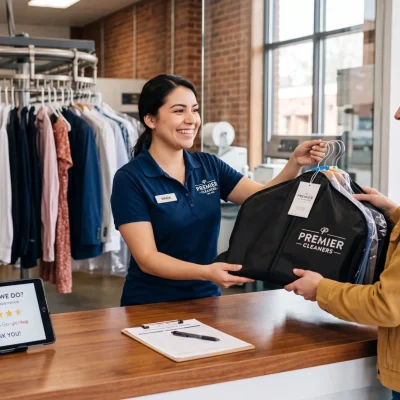
- When a customer picks up their garments and expresses satisfaction
- After a smooth delivery or pickup
- Following a resolved issue that ended well
When the timing feels connected to the experience, the request feels relevant rather than intrusive.
Keep Your Language Simple and Human
Customers respond best to straightforward, low-pressure language.
There is no need for long explanations or scripted requests. A simple approach often works best, such as:
- “If you have a moment, we’d really appreciate a review.”
- “Your feedback helps others feel confident choosing us.”
- “Reviews really help support our small business.”
The goal is not to convince, but to invite.
Make It Easy to Follow Through
Even happy customers may skip leaving a review if the process feels inconvenient.
To remove friction:
- Share a direct review link
- Include the link in a follow-up email or text
- Use QR codes at the counter or on receipts
The easier it is, the more likely customers are to say yes.
Ask for Reviews Consistently, Not Only When You Need It
One common mistake is asking for reviews only when business slows down.
Instead, review requests should be part of your routine. When customers see that reviews are a regular part of your process, the request feels expected and comfortable rather than urgent or reactive.
Consistency helps review requests feel genuine.
Make Review Requests Feel Natural and Automatic
One reason asking for reviews can feel uncomfortable is that it relies too heavily on memory and timing. When the ask is left entirely to chance, it often feels awkward or inconsistent.
That’s where having a simple system in place makes all the difference.
With ReviewMyDryCleaner, review requests are automatically sent after a customer interaction, while the experience is still fresh. Instead of having to remember when or how to ask, the process happens naturally in the background.
This approach helps:
- Remove pressure from in-store conversations
- Ensure customers are asked at the right moment
- Create consistency without sounding repetitive
- Make it easier for happy customers to follow through
When review requests are built into your workflow, they stop feeling like a sales ask and become part of good customer service.
Responding Matters as Much as Asking
Asking for reviews is only one part of the equation.
Thanking customers for positive feedback reinforces appreciation. Responding thoughtfully to concerns shows accountability. When customers see that reviews are read and valued, future requests feel more authentic.
Engagement builds trust long after the review is posted.
Final Thoughts
Asking for reviews does not have to feel pushy.
When the timing is right, the language is simple, and the right systems support the process, review requests become a natural extension of good service.
At BeCreative360, we help dry cleaners build respectful, consistent systems for requesting and managing reviews, so reputation grows naturally, without pressure.
Because trust is built through thoughtful follow-through, not forced asks.